When the Community Leads, Inclusion Follows: Why Disability Leadership is Essential for a Truly Inclusive Future?
Updated: Dec 13, 2025
What if the people you are trying to empower already know the answers better than any policy,
consultant, or expert ever could?
I learned this not through theory, but through proximity- working alongside Deaf leaders for a mission with Enable India through Niiti Consulting and Questera Foundation, that reshaped my understanding of inclusion. It wasn’t just a project, it was a humbling, daily awakening to what true leadership looks like when lived experience, not assumption, guides the way.
For nearly two and a half years, I worked on a project named Hear A Million, a powerful mission to empower one million Deaf people in India by 2030. Unlike most development sector projects where the thought leadership is dominated by non-disabled professionals, this mission was driven by Deaf leaders themselves.
Working with an entirely Deaf team was not just a professional assignment. It was a daily unlearning
and relearning of what inclusion truly means.
The Power of Lived Experience
Before this experience, I believed I was empathetic, sensitive, and aware. But every single day, I discovered blind spots- small moments that revealed how little I truly understood about their day- to-day challenges.
When interventions are designed by the community, not for them, the shift is both powerful and practical. A Deaf leader knows what barriers truly exist- because they live them. They know which solutions are workable, accessible, and respectful- because they’ve needed them all their lives. No hearing person, no matter how well-intentioned, can replicate the wisdom borne out of ones lived experiences.
The Interpreter Gap: A Systemic Barrier We Don’t Talk About Enough
All our meetings relied on Indian Sign Language (ISL) interpreters. And yet, finding a good interpreter was a constant struggle. Meetings had to be postponed. Discussions stalled. Momentum broke.
This was my first real glimpse of a structural barrier that affects every Deaf professional across India:
Without interpreters, communication collapses
When communication collapses, participation collapses
When participation collapses, leadership becomes a privilege not a right
As per WHO estimates, India has nearly 63 million Deaf individuals. Yet, there are only 800 certified Indian Sign Language (ISL) interpreters, according to ISLRTC. While many untrained interpreters including children or siblings of Deaf adults (CODAs/SODAs) often interpret more naturally due to lived linguistic exposure, even their numbers remain only in the low hundreds. This gap isn’t just numerical, it reflects a systemic invisibility that restricts access, participation, and leadership for Deaf professionals every single day. India urgently needs a massive recognition of such interpreters and investment in high-quality interpreter training and deployment. Inclusion cannot run on scarcity.

When Bias Shows Up Quietly - And How Awareness Changes Everything
I’ll be honest: I didn’t automatically “respect” my Deaf leader just because he held a senior role. Respect came later- through his conviction, fierce advocacy, and relentless push for Deaf rights. At times, I was called out for not being inclusive enough. At times, I felt I was being reminded of my hearing privilege. It hurt initially.
Then something shifted.
I realised: The discomfort I felt as a hearing person is what many men feel when women discuss gender inequity. They empathise. They support. But they can’t fully understand. And similarly, hearing people- even the most supportive ones- cannot fully understand the lived realities of Deaf individuals.
That “aha” moment changed everything for me.
Deaf-Led Interventions Work Best
Solutions for the Deaf community must be co-created with Deaf leaders.
Not as token advisors.
Not as symbolic representatives.
But as the central thinkers, designers, and decision-makers.
Because dignity is not charity.
Inclusion is not an HR policy.
Empowerment is not a workshop.
It is leadership.

A Personal Appeal to Hearing Professionals
If you work with Deaf colleagues, here’s what you can do starting today:
Ask what they consider respectful conduct
Prioritise interpreter support for every meeting
Be patient and simple with written communication
Avoid assumptions about capability
Include them in decisions, not just execution
Learn basic ISL- even 50 signs can transform workplace belongingness
Most importantly:
Don’t speak for them. Create space for them to speak.
Inclusion is not about “helping” persons with disabilities. It’s about acknowledging that they must lead the way forward. The most sustainable solutions emerge when those who understand the struggle also design the change.
As India builds a future that is more inclusive and equitable, leadership from persons with disabilities- especially Deaf leaders- is not optional. It’s essential.


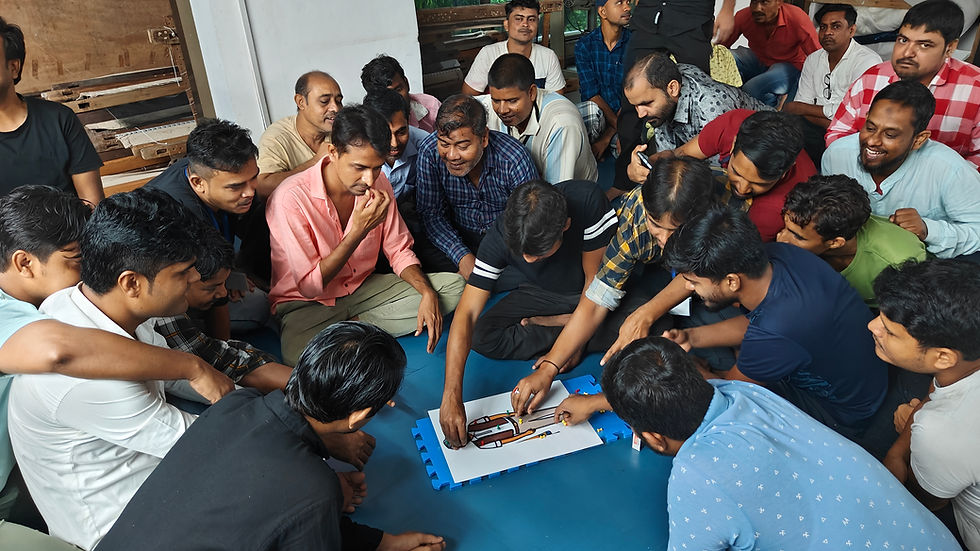

I had a hearing impaired person at check in counter in Indigo at Hyderabad airport. Very glad to see him work seemlessly and Kudos to IndiGo too.