top of page
.png)

All Posts


You Can't Improve What You Don't Measure: The Case for Smart Outcome Tracking
How small organisations and social enterprises can track impact without burning through time or budget Imagine spending months running a literacy programme, a skills training initiative, or a community health drive — and at the end of it, not being able to clearly answer: did it work? For many small organisations and social enterprises, this is an uncomfortable reality. Not because the work isn't making a difference, but because tracking that difference feels complicated, exp

Meena Vaidyanathan
Mar 184 min read


Building Capability That Sustains: Case Studies from Niiti’s Doer’s Labs Practice
Across sectors, traditional training programmes struggle to translate learning into sustained behaviour change. Research on training transfer suggests that only a small proportion of learning is applied in real work settings, with estimates indicating that less than 20% of training translates into on-the-job practice. Organisations continue to face challenges with adoption, retention, and application despite significant investments in capacity building. Niiti works at the i

Anamika Gupta
Mar 67 min read


When the Field Becomes the Classroom: What Sports Taught Me About Social Change
I didn’t enter the social sector thinking sports could be one of the strongest teachers. Like many others, I associated development work with classrooms, community meetings, long discussions, and carefully designed training modules. Sports, at best, felt like an add-on-useful, but not central. That assumption didn’t last very long. Over the years, through evaluations, field visits, and conversations with practitioners far more rooted than me, sports quietly but firmly reshape

Vaishali Gargg Jain
Jan 294 min read


When the Community Leads, Inclusion Follows: Why Disability Leadership is Essential for a Truly Inclusive Future?
What if the people you are trying to empower already know the answers better than any policy, consultant, or expert ever could? I learned this not through theory, but through proximity- working alongside Deaf leaders for a mission with Enable India through Niiti Consulting and Questera Foundation, that reshaped my understanding of inclusion. It wasn’t just a project, it was a humbling, daily awakening to what true leadership looks like when lived experience, not assumption, g
Vaishali Gargg Jain
Dec 12, 20253 min read


Is Transparency the key to good governance and better productivity?
In the year 2016, Wells Fargo was fined 185 million dollars (1) because 5300 of its employees had opened bank accounts in their customers’ names without their consent. Wells Fargo had strict quotas regulating the number of daily ‘solutions’ that its bankers must reach; these ‘solutions’ include the opening of all new banking and credit card accounts. The quotas imposed by Wells Fargo on its employees were often not attainable because there simply were not enough customers ent
Meena Vaiyanathan and Ramya Gopalakrishnan
Dec 10, 20253 min read


Listening Beyond Words: How Bollywood Can Help Build a More Deaf-Inclusive India
In my 6+ years of development sector experience, I’ve worked closely with the deaf community for a few of the years- and yes, I’m using the word deaf deliberately. Most deaf individuals I’ve met prefer this term over “persons with hearing impairment,” because it affirms identity rather than deficiency. To them, deafness isn’t a limitation - it’s a culture, a language and a shared experience. So when I look at how Bollywood portrays deaf characters, I don’t see it as just “cin
Vaishali Gargg Jain
Dec 3, 20254 min read


Strengthening Pathways to Livelihood: Reflecting on the collaboration with Niiti Consulting
By Sanjay Chittora, Director, STEP Academy, Aajeevika Bureau At STEP Academy — the skilling initiative of Aajeevika Bureau — we’ve always believed that real impact happens when training goes beyond classrooms and connects deeply with people’s everyday realities. One of our flagship efforts is the On-the-Job Training (OJT) programme. It’s a simple but powerful idea — train unskilled workers right where the work happens, so learning is practical, relevant, and immediately usefu
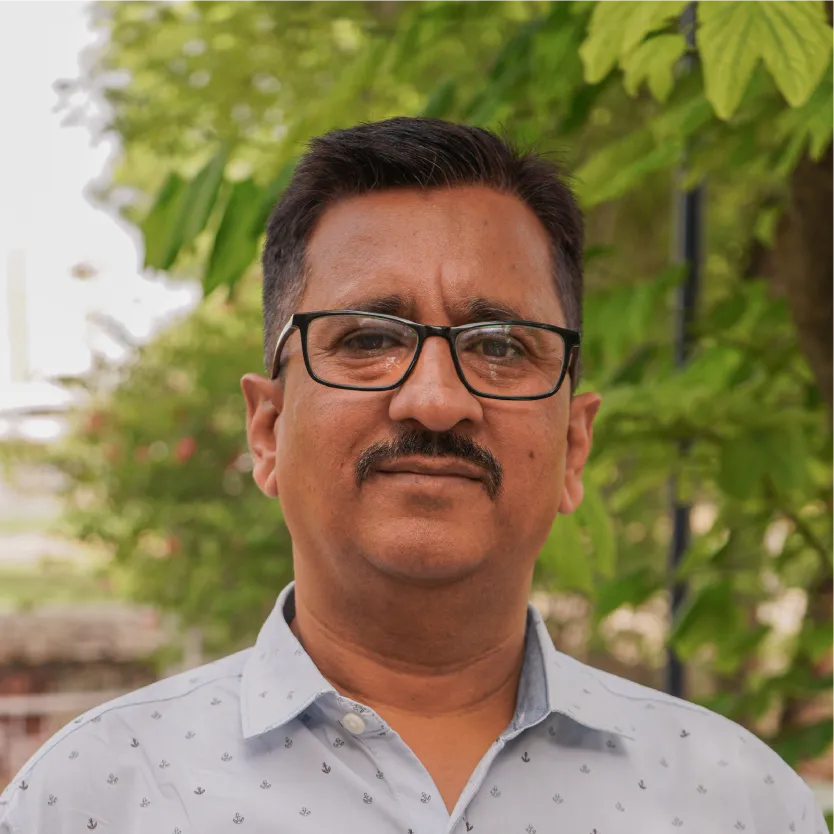
Sanjay Chittora
Nov 17, 20252 min read


Sports for Gender Equality: How Play Can Power Social Change
From football fields to kabaddi courts, sports are transforming how girls claim agency and leadership. Learn how design-led, evidence-based programs like CEQUIN’s Kickstart Equality and Terre des Hommes’ Kabaddi for Gender Justice are advancing gender inclusion in India. Picture Credits: Centre for Equity and Inclusion (CEQUIN) When Bismillah’s grandmother began pressing for an early marriage, Bismillah chose a different path. She sought help from a friend who was working in
Anamika Gupta
Oct 7, 20254 min read


Design-Led Frameworks for Systems Change: Strategies from the Ground
“We are caught in an inescapable network of mutuality, tied in a single garment of destiny,” These timeless words from Martin Luther King spell out the essence of systems change process- recognizing interdependence and designing for it. When we think about creating impact in society, it is tempting to look for quick fixes like setting up a one-off vocational centre, a library or an internet cafe, without understanding the social context. Such efforts may not sustain in the l
Anamika Gupta
Sep 26, 20253 min read


Inclusive Design and National Education Policy: Lessons from Grounded Nutrition Initiatives in Schools
By Archana Sinha, Nourishing Schools Foundation This year marks 15 years of impact for Niiti Consulting, and we at Nourishing Schools Foundation are glad to have journeyed alongside them in advancing equitable, community-rooted learning solutions. Our collaboration has been shaped by a shared belief—that education must be contextual, inclusive, and deeply connected to the communities it serves. At the Nourishing Schools Foundation, our work lies at the intersection of educ

Archana Sinha
Sep 17, 20253 min read


What kind of leader are you?
There’s no denying that the role of a ‘leader’ has expanded extensively in the past few decades. The increasing prevalence of ‘both/and’ leadership means that leaders are not only spearheading organizations, they are also managing the gap between the global and the local, maximizing their company’s values while doing good by the community. With these ever-growing paradoxical demands, it has never been more important for you to know what kind of leader you are. Your leadersh
Meena Vaidyanathan
May 26, 20253 min read


The role of a leader of a 21st century workforce
The Leadership Dilemma The idea of leadership has always drawn people’s attention. What makes someone a good leader? Have we reached a position where old-fashioned hierarchies don’t apply, and if so, how can a leader adapt to the same? Raj Nayak, the then COO of Viacom18 and founder of House of Cheer, was the best person to spearhead the panel on leadership during 2018’s edition of Knowledge Factory. Raj and Madhavan Narayanan (editor and consultant) discuss how ideas about l

Samrudhi Sridharan
May 19, 20252 min read


The hidden benefits of inclusion at your organization
There’s a growing body of research proving the tangible and measurable outcomes of diversity and inclusion initiatives in organizations: whether it is achieving better financial returns , or capturing new markets of customers. Visibility is another highly touted outcome of these initiatives: a brand’s perception changes based on their inclusion practices. As this study shows, 64% of people surveyed would take action if the ad they saw was inclusive. But diversity & inclusi
Meena Vaidyanathan
May 12, 20252 min read


One Step Forward: Building an Evaluation Culture
As the old adage goes, “What gets measured gets done”. It’s a management mainstay, focusing heavily on the importance of frequent measurement and reporting to help you tackle all your challenges. It’s the ideological basis of monitoring and evaluation, the first step towards building an evaluation culture. Any organization can adapt an M&E system based on project types and goals. Evaluation culture takes it a step forward, by embedding evaluation and learning within organiza
Meena Vaidyanathan
May 5, 20253 min read


The Basics of M&E for the Development Sector
In 2014, we had to work with a national non-profit working on improving health and hygiene among women in rural Uttar Pradesh. As a part of the project, tens of thousands of women were surveyed, and a sanitation plan was developed, and deployed. A year after the project, the sanitation plan was all but abandoned as there were no users, and local authorities did not find the resources to implement it at all. Looking back on this, the main thing that strikes us is: why did it
Meena Vaidyanathan
Apr 28, 20253 min read


The untapped potential of nano - entrepreneurs
There is a section of entrepreneurs that are all around us, but are rarely recognized as ‘entrepreneurs’. We’re talking about nano-entrepreneurs. A nano-entrepreneur , by definition, is a person who runs a business, employing 1-2 people, and dealing with a limited amount of capital and scale. They require little overhead, and thereby, little in the form of initial investment as well. This definition can include a wide variety of workers in India: from people who run petty sh
Meena Vaidyanathan and Samruddhi Sridharan
Apr 21, 20252 min read


The culture of social entrepreneurship in India
The idea of ‘social entrepreneurship’ has been gaining a lot of momentum lately, especially with the ever-increasing focus on self-reliance within the country. This is fueled by India’s long standing tradition of social enterprises, starting from Amul India’s establishment in 1950 as a milk co-operative that lifted thousands of dairy farmers from poverty . While Amul was not established as a social enterprise, it’s a promising and exceedingly famous example of one: after all,

Vaishali Garg
Apr 14, 20253 min read


The promise of India's startup economy
Knowledge Factory is a festival of ideas, insights, and trivia. It’s an avenue of knowledge exchange to throw light on unconventional topics relevant to our world today. Subscribe to Knowledge Factory on Twitter & YouTube to stay connected to this world of new ideas. India has been a thriving ground for aspiring entrepreneurs, as evidenced by the fact that even in the throes of the pandemic, a whopping 16,000 start-ups were recognized in the 2020-21 period. The industry is
Samrudhi Sridharan
Apr 7, 20252 min read


Social Enterprises- The present and the Future
With over 2 million social enterprises registered, India is one of the most fecund grounds for social innovations in the entire world. Global interest in Indian social enterprises is also on the rise: as evidenced by the India Impact Investment trends , which shows that impact investments amounted to $2.6 billion in 2020, with a lot of momentum being shown in early-stage enterprises focused on education, development, agriculture, and healthcare. The future is limitless, as i

Shivangi Gupta
Mar 31, 20252 min read


Why Having a Mentor you can Trust Matters
In June, we spoke to Swati Pandey, the laureate of the 2018 Cartier Women’s Initiative (CWI) and Meena Vaidyanathan, the founder of Niiti Consulting and Swati’s CWI mentor about their mentor-mentee relationship. 1. How did your mentoring relationship start off back in September 2018 and how has it evolved since then?Swati (laureate): In the beginning, it took us about two months to connect in person. We connected much better once we had met in person than over emails. Si
Cartier Women’s Initiative (2019)
Jan 22, 20251 min read
bottom of page